
Natural Compound Categories

The following overview describes six general categories of natural compounds and nutritional concepts of relevance to male physiological well-being. Each entry is presented as an educational summary only. No products are sold or endorsed.

General Characteristics Matrix

The table below summarises key general characteristics of the six compound categories described in this compendium. Properties listed are descriptive of the category type, not claims about specific formulations or outcomes.

Category Origin Primary Compounds Water Soluble Documented in Literature Dietary Sources
Herbal Extracts Botanical Alkaloids, saponins Plant roots, leaves
Essential Minerals Inorganic Zinc, Magnesium, Selenium Nuts, seeds, grains
Fat-Soluble Vitamins Organic Vitamins A, D, E, K Oils, fatty fish, dairy
Amino Acid Precursors Organic L-Arginine, L-Carnitine Animal protein, legumes
Polyphenol Compounds Botanical Flavonoids, resveratrol Berries, dark grapes, tea
Omega Fatty Acids Lipid EPA, DHA, ALA Oily fish, flaxseed, walnuts

Six Categories Explained

Collection of dried herbal plants including echinacea flowers, ginger root slices, and elderberries arranged on dark slate with soft overhead diffused natural light

Herbal Extracts for General Well-being

Concentrated preparations derived from botanicals such as roots, leaves, and bark that have been documented in traditional health practices across multiple cultures. Modern phytochemistry characterises their active constituents and studies their general physiological interactions.

General Physiological Roles

  • Participation in adaptogenic signalling pathways as studied in academic literature
  • Contribution to antioxidant enzyme cofactor systems via polyphenolic constituents
  • Interaction with inflammatory pathway markers as documented in research contexts
Learn More
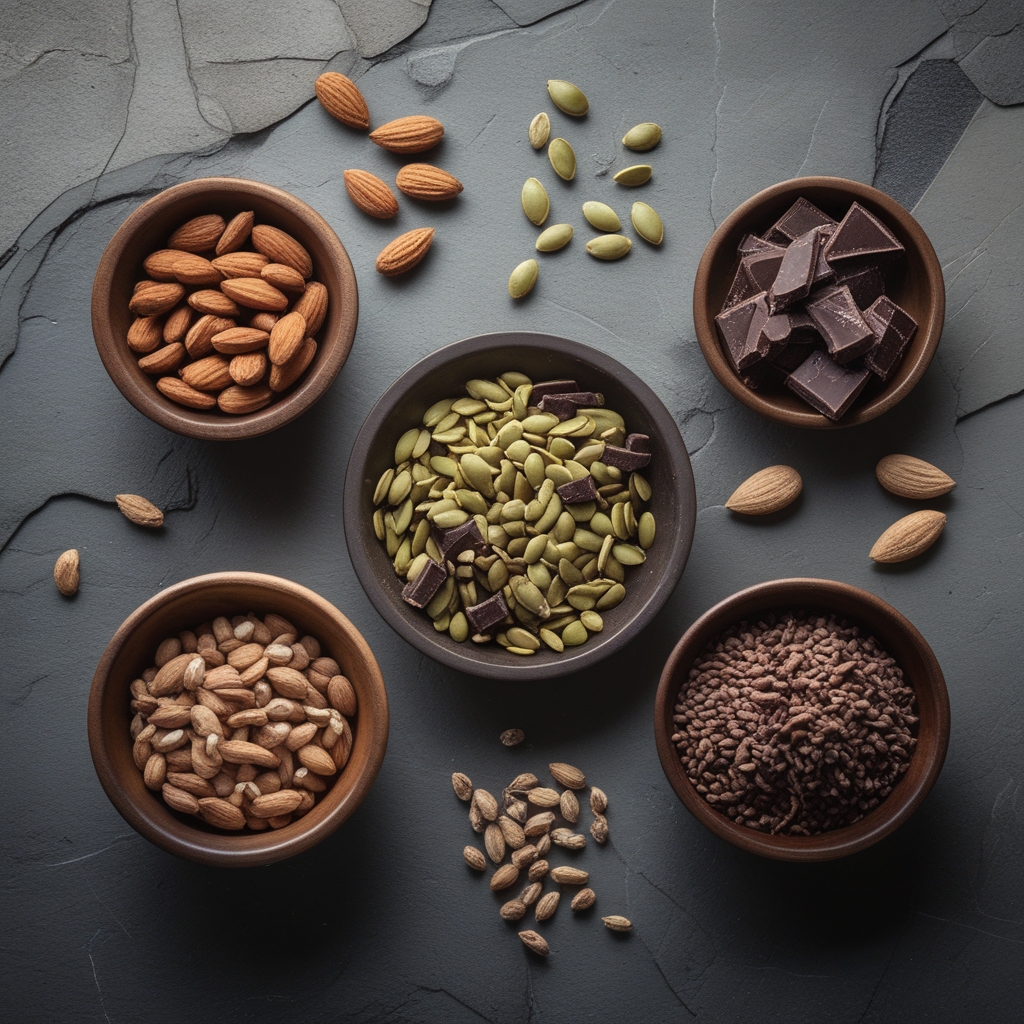
Assorted mineral-dense foods including raw almonds, pumpkin seeds, dark chocolate pieces, and dried legumes displayed in small wooden bowls on a neutral stone background

Minerals for Metabolic Support

Essential inorganic elements required in trace to moderate quantities for enzymatic function, structural integrity of biological molecules, and electrical signalling in excitable tissues. Dietary adequacy is established by reference to established daily intake guidelines.

General Physiological Roles

  • Functioning as enzymatic cofactors in over 300 documented biochemical reactions
  • Structural contribution to bone mineralisation and connective tissue integrity
  • Role in intracellular signalling cascades relevant to muscle and nerve function
Learn More
Fresh citrus fruits cut in half alongside colourful bell peppers, kale leaves and sunflower seeds on a bright white surface demonstrating vitamin-rich whole food sources

Vitamins for Daily Vitality

Organic micronutrients classified as either water-soluble (B-group, C) or fat-soluble (A, D, E, K), each with distinct metabolic roles and storage characteristics. Dietary requirements vary by age, activity level, and physiological status.

General Physiological Roles

  • Supports cellular energy metabolism via coenzyme participation in the citric acid cycle
  • Contributes to immune system maintenance and antioxidant defence mechanisms
  • Aids in calcium absorption and bone density maintenance through vitamin D pathways
Learn More
High-protein natural food ingredients including sliced chicken breast, boiled eggs, cooked lentils and edamame beans arranged in clean portions on a wooden cutting board

Amino Acid Precursors

Conditionally essential or non-essential amino acids that serve as metabolic precursors to biologically active compounds. While synthesisable by the body under normal conditions, their supply from dietary or supplementary sources has been explored in exercise physiology literature.

General Physiological Roles

  • Precursor to nitric oxide synthesis, relevant to vascular tone research
  • Role in fatty acid transport into mitochondria for cellular energy production
  • Contribution to neurotransmitter precursor synthesis in the central nervous system
Learn More
Dark purple blueberries, sliced red pomegranate, green tea leaves and dark cocoa nibs arranged on a polished dark stone surface demonstrating polyphenol-rich food sources

Polyphenol Compounds

A structurally diverse group of plant secondary metabolites characterised by multiple phenolic rings. Polyphenols encompass flavonoids, stilbenes, lignans, and phenolic acids, each with distinct distribution patterns across the plant kingdom and studied biological activities.

General Physiological Roles

  • Direct radical-scavenging activity contributing to cellular antioxidant capacity
  • Modulation of nuclear factor pathways as documented in cell biology research
  • Support of gut microbiome diversity through fermentation substrate provision
Learn More
Whole and sliced fresh salmon fillet alongside walnuts, flaxseeds, and a small glass bottle of golden flaxseed oil on a clean slate surface with soft natural daylight

Omega Fatty Acids

Polyunsaturated fatty acids classified by the position of their first double bond. The omega-3 series (ALA, EPA, DHA) and omega-6 series (LA, AA) are essential or conditionally essential, obtainable principally from dietary sources, and extensively studied in cardiovascular and neurological research.

General Physiological Roles

  • Structural component of cell membrane phospholipid bilayers throughout the body
  • Precursor to eicosanoid signalling molecules involved in inflammatory regulation
  • Contribution to cognitive processes via DHA incorporation in neuronal membranes
Learn More

Information Context and Limitations

All entries in this compendium are purely informational descriptions of compound categories. They do not represent product descriptions, efficacy claims, or purchasing recommendations. Physiological roles listed are general descriptions derived from academic literature and do not constitute promises of outcomes for any individual. No items described on this page are sold, endorsed, or affiliated with any commercial entity. Consult a qualified healthcare professional for any personal health-related questions.