





Close-up of assorted whole natural ingredients including ginger root, turmeric, green herbs and seeds arranged on a dark slate surface with dramatic side lighting
Independent Educational Resource

Exploring Natural Supplements for Men's Well-being and Essential Male Vitamins

An in-depth informational overview of natural compounds, nutritional science, and the foundational principles that shape understanding of male physiological health.

Educational content only. No promises of outcomes.

Understanding Key Nutrients

The male body relies on a precise interplay of vitamins, minerals, and organic compounds to sustain its basic physiological processes. Understanding which nutrients are most relevant to male physiology is the starting point for any informed exploration of nutritional well-being.

Below is an overview of nutrients commonly referenced in scientific literature in relation to the male organism:

  • Vitamin D A fat-soluble nutrient synthesized in response to sunlight exposure; plays a structural role in bone mineralisation and is involved in numerous cellular signalling pathways.
  • Magnesium An essential mineral acting as a cofactor in over 300 enzymatic reactions, including those governing muscle contraction, protein synthesis, and energy metabolism.
  • Zinc A trace element critical for cellular division, immune response regulation, and the maintenance of normal physiological function throughout adulthood.
  • Vitamin B Complex A group of eight water-soluble vitamins that collectively support energy production via the citric acid cycle and contribute to neurological and haematological health.
  • Selenium A trace mineral functioning as an antioxidant cofactor; integral to thyroid hormone metabolism and cellular protection against oxidative stress.
Assortment of natural mineral-rich foods including dark leafy greens, seeds, legumes, and whole grains arranged on a light stone background in a flat lay composition

The Role of Botanicals

Herbal extracts have been documented across cultures and historical periods as sources of bioactive compounds. Modern phytochemistry studies these substances to understand their molecular composition and general physiological relevance.

Ashwagandha root pieces and dried leaves arranged on a rough-textured natural linen surface with warm directional light emphasising earthy tones

Ashwagandha

A root originating from the Withania somnifera plant, long documented in Ayurvedic literature. Phytochemical analysis identifies withanolides as its primary bioactive constituents, studied for their adaptogenic properties in academic contexts.

Korean ginseng root with forked shape and thin rootlets resting on dark polished wood with soft overhead diffused lighting highlighting its textured surface

Panax Ginseng

Among the most extensively researched botanical specimens, Panax ginseng contains ginsenosides, a class of triterpenoid saponins. Traditional use in East Asian cultures spans thousands of years, while modern studies examine its general physiological interactions.

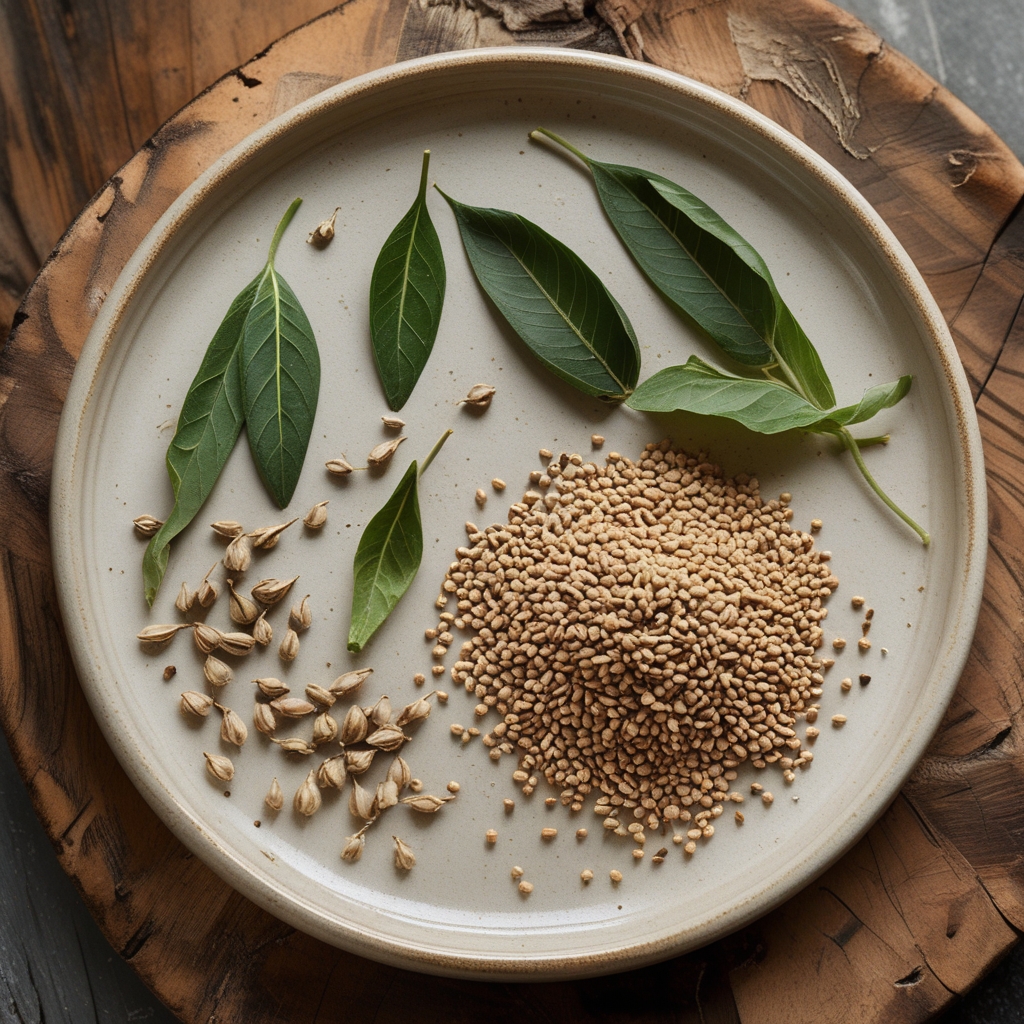
Dried fenugreek seeds scattered alongside whole pods and fresh green fenugreek leaves on a cream ceramic plate set on a wooden rustic table

Fenugreek

Trigonella foenum-graecum is a legume-family plant whose seeds contain furostanolic saponins and soluble fibre. Documented in traditional Mediterranean and South Asian culinary and botanical practice, it continues to be studied in nutritional science literature.

Dietary Sources and Balance

Whole food sources represent the most contextually appropriate and bioavailable delivery system for the nutrients discussed on this site. The following overview describes food categories and their known nutritional contributions to the male organism.

Protein-Rich Foods

Adequate protein intake is fundamental to tissue maintenance and enzyme production. Key sources include:

  • Lean meats (poultry, beef) providing complete amino acid profiles and haem iron
  • Oily fish such as salmon and mackerel, rich in omega-3 fatty acids and vitamin D
  • Legumes including lentils and chickpeas as plant-based alternatives offering fibre alongside protein
  • Eggs providing biotin, choline, and all essential amino acids within a single food source

Vegetables and Leafy Greens

Dark leafy vegetables are among the most nutrient-dense foods available in a standard diet:

  • Spinach and kale containing magnesium, folate, and vitamin K
  • Broccoli providing sulforaphane compounds, vitamin C, and dietary fibre
  • Cruciferous vegetables contributing indole-3-carbinol, relevant in metabolic research

Nuts, Seeds, and Healthy Fats

These foods deliver concentrated micronutrients alongside essential fatty acids:

  • Pumpkin seeds are among the richest dietary zinc sources per gram
  • Brazil nuts provide selenium at levels that can meet daily requirements in small servings
  • Walnuts and flaxseed contain alpha-linolenic acid (ALA), a plant-based omega-3
  • Avocado provides monounsaturated fats alongside potassium and B vitamins

Whole Grains and Complex Carbohydrates

Stable energy provision is essential for systemic physiological function:

  • Oats and barley contain beta-glucan, a soluble fibre associated with cholesterol regulation in research
  • Brown rice and quinoa deliver B vitamins alongside sustained glucose release
  • Whole grain rye and wheat offer manganese, important for antioxidant enzyme function

Lifestyle Factors for Well-being

Early morning outdoor environment with a running path through a park lined with tall trees, soft golden sunlight filtering through the canopy, empty and serene

Nutritional intake does not exist in isolation. Research consistently demonstrates that lifestyle variables interact with and modulate the effectiveness of any dietary approach. The following factors represent areas of scientific interest in the context of general male well-being.

Regular Physical Activity

Structured physical exercise is associated with modulation of metabolic rate, maintenance of musculoskeletal integrity, and cardiovascular efficiency. Both aerobic and resistance forms of training have been documented in literature as contributing to hormonal homeostasis.

Adequate Sleep Duration

Sleep is a critical physiological process during which anabolic hormonal activity peaks, cellular repair occurs, and cognitive consolidation takes place. Research published in endocrinology literature indicates that sleep deprivation correlates with measurable shifts in metabolic markers.

Stress Modulation

Chronic psychosocial stress activates the hypothalamic-pituitary-adrenal (HPA) axis, leading to sustained cortisol elevation. Academic research examines how prolonged HPA activation interacts with nutritional status and immune function in adult males.

Hydration and Electrolyte Balance

Water constitutes approximately 60% of adult body mass and serves as the universal solvent for nutrient transport, waste elimination, and thermoregulation. Electrolyte balance — particularly sodium, potassium, and magnesium — is integral to neuromuscular function.

Common Misconceptions

Clarity in nutritional science requires distinguishing between established evidence and widespread assumptions. The following contrasts represent areas where public understanding frequently diverges from scientific consensus.

Common Assumption

Natural supplements deliver immediate, measurable results within days of commencement, operating independently of diet and lifestyle context.

Scientific Context

Nutritional compounds generally require consistent intake over extended periods before physiological changes can be observed or measured. Outcomes are invariably influenced by baseline nutritional status, absorption rates, and concurrent lifestyle factors.

Common Assumption

"Natural" or plant-derived compounds are inherently safe in any quantity and carry no physiological risk.

Scientific Context

Bioactive compounds — whether synthetic or botanical in origin — exert dose-dependent effects. Excessive intake of even naturally occurring substances such as fat-soluble vitamins (A, D, K) can produce measurable adverse physiological responses documented in clinical literature.

Common Assumption

Supplementation can substitute comprehensively for the nutritional complexity provided by a balanced, varied whole-food diet.

Scientific Context

Whole foods provide synergistic combinations of nutrients, phytochemicals, and dietary fibre whose interactions cannot be fully replicated through isolated supplements. Nutritional research consistently identifies dietary patterns — not individual supplements — as the strongest predictors of long-term metabolic health markers.

Common Assumption

All men share identical nutritional requirements and will respond uniformly to the same dietary interventions.

Scientific Context

Nutrient requirements vary substantially across individuals based on age, genetic polymorphisms affecting absorption pathways, current health status, physical activity level, and geographic factors such as latitude influencing vitamin D synthesis. Personalised nutritional assessment lies strictly within the domain of qualified healthcare professionals.

Glossary of Terms

The following definitions provide precise scientific context for terminology used throughout this site. Understanding these concepts supports more accurate interpretation of nutritional and phytochemical literature.

Adaptogen
A class of botanical or fungal compounds studied for their purported capacity to support non-specific physiological resistance to stressors. The term was formalised in Soviet pharmacological research in the 1940s and remains an area of ongoing academic investigation.
Bioavailability
The fraction of an ingested nutrient or compound that is absorbed from the gastrointestinal tract and becomes accessible at target tissues. Bioavailability is influenced by food matrix, pH, concurrent nutrient intake, and individual physiological variables.
Phytochemical
A naturally occurring chemical compound produced by plants, typically as a defence mechanism or signalling molecule. Phytochemicals include polyphenols, flavonoids, carotenoids, glucosinolates, and alkaloids, many of which are subjects of nutritional science research.
Antioxidant
A molecule capable of inhibiting the oxidation of other molecules by neutralising free radicals. In biological systems, antioxidants help regulate the balance between reactive oxygen species (ROS) production and cellular defence capacity, a process studied under the broader framework of oxidative stress biology.
Micronutrient
Vitamins and minerals required by the body in relatively small but physiologically essential quantities. Unlike macronutrients (carbohydrates, proteins, fats), micronutrients do not contribute direct caloric energy but serve as cofactors and structural components in enzymatic and hormonal systems.
Saponin
A glycoside compound found in numerous plant species, characterised by its soap-like foaming properties in aqueous solution. Steroidal saponins, such as those found in fenugreek and tribulus, are of particular interest in phytochemical research due to their structural similarity to steroid hormones.
Cofactor
A non-protein chemical compound required for an enzyme to carry out its catalytic function. Minerals such as magnesium, zinc, and selenium function as cofactors in numerous enzymatic pathways integral to metabolic and reproductive physiology.
HPA Axis
The Hypothalamic-Pituitary-Adrenal axis refers to the complex neuroendocrine feedback system governing the stress response, circadian rhythm, and modulation of numerous hormonal cascades including those influencing reproductive physiology and immune function.
Ancient-looking dried medicinal herbs and botanical specimens arranged in small ceramic bowls on an aged weathered wooden surface with warm candlelight illumination creating deep shadows

Evolution of Natural Health Approaches

The documentation of botanical and mineral use in maintaining human health predates formal medical systems by millennia. From Ayurvedic texts composed in ancient India to the pharmacopoeias of Classical Greek and Roman physicians, specific plant compounds and dietary mineral sources were catalogued with notable empirical rigour for their era.

Contemporary nutritional science inherits this long tradition while applying modern analytical techniques — including mass spectrometry, randomised controlled trials, and molecular biology — to evaluate and contextualise these historical observations with scientific precision. The intersection of ethnobotanical heritage and evidence-based research forms the intellectual foundation upon which resources such as this are built.

Frequently Explored Questions

The following questions represent recurring areas of inquiry encountered in the context of natural nutrition and male well-being. Answers are informational in character and do not constitute individual guidance.

Vitamins are organic compounds — meaning they contain carbon — and are generally produced by living organisms, including plants and animals. Minerals, by contrast, are inorganic elements sourced from the earth's crust and absorbed by organisms through soil and water. Both categories are considered micronutrients: essential in small quantities for normal physiological function, yet not synthesised in adequate amounts by the human body itself (with the notable exception of vitamin D, which can be produced via skin exposure to ultraviolet radiation).
Gastrointestinal absorption efficiency for numerous micronutrients — particularly vitamin B12, calcium, and magnesium — is documented to decline with advancing age in males. Reduced gastric acid secretion (achlorhydria), changes in intestinal motility, and alterations in gut microbiome composition are among the physiological mechanisms proposed in gerontological literature to explain this reduced bioavailability. This is an active research domain with implications for nutritional policy in ageing populations.
Zinc is involved as a cofactor in over 300 enzymes and is particularly concentrated in tissues relevant to male reproductive anatomy. Research literature identifies zinc as a structural component of numerous transcription factors and a participant in cellular proliferation pathways. Dietary zinc is found predominantly in animal-source foods (particularly oysters and red meat) and to a lesser extent in legumes and seeds, though the latter contain phytates that reduce absorption efficiency.
For the majority of healthy adults with access to a diverse and balanced diet, food sources can provide adequate quantities of most essential micronutrients. However, specific circumstances — including restricted dietary patterns, geographical latitude limiting UV exposure, high physical activity demands, or genetically determined absorption variability — may create contexts where dietary intake alone may not sustain optimal nutritional status. Assessment of individual nutritional status is the domain of qualified healthcare or nutrition professionals using validated diagnostic tools.
The gastrointestinal microbiome — comprising trillions of microbial organisms inhabiting the digestive tract — is increasingly recognised in research as a significant modulator of nutrient metabolism. Specific bacterial taxa contribute to the synthesis of certain B vitamins and vitamin K, while the overall microbial community composition influences intestinal permeability, inflammatory signalling, and the efficiency of mineral absorption. Microbiome research is one of the most dynamic frontiers in contemporary nutritional science.

Continue Your Learning Journey

This resource contains further material on the scientific background of natural compounds, the history of nutritional research, and the broader context of male physiological well-being. All content is strictly informational.

Information Context and Limitations

All material on this website is presented for general educational purposes only. Content describes concepts, phenomena, and scientific context without constituting individual advice, recommendations, or guidance of any kind. The diversity of individual circumstances means that no generalised information can serve as a substitute for personalised assessment. This site does not make promises about outcomes of any kind. If you have questions relating to your personal health, please consult a qualified healthcare professional.